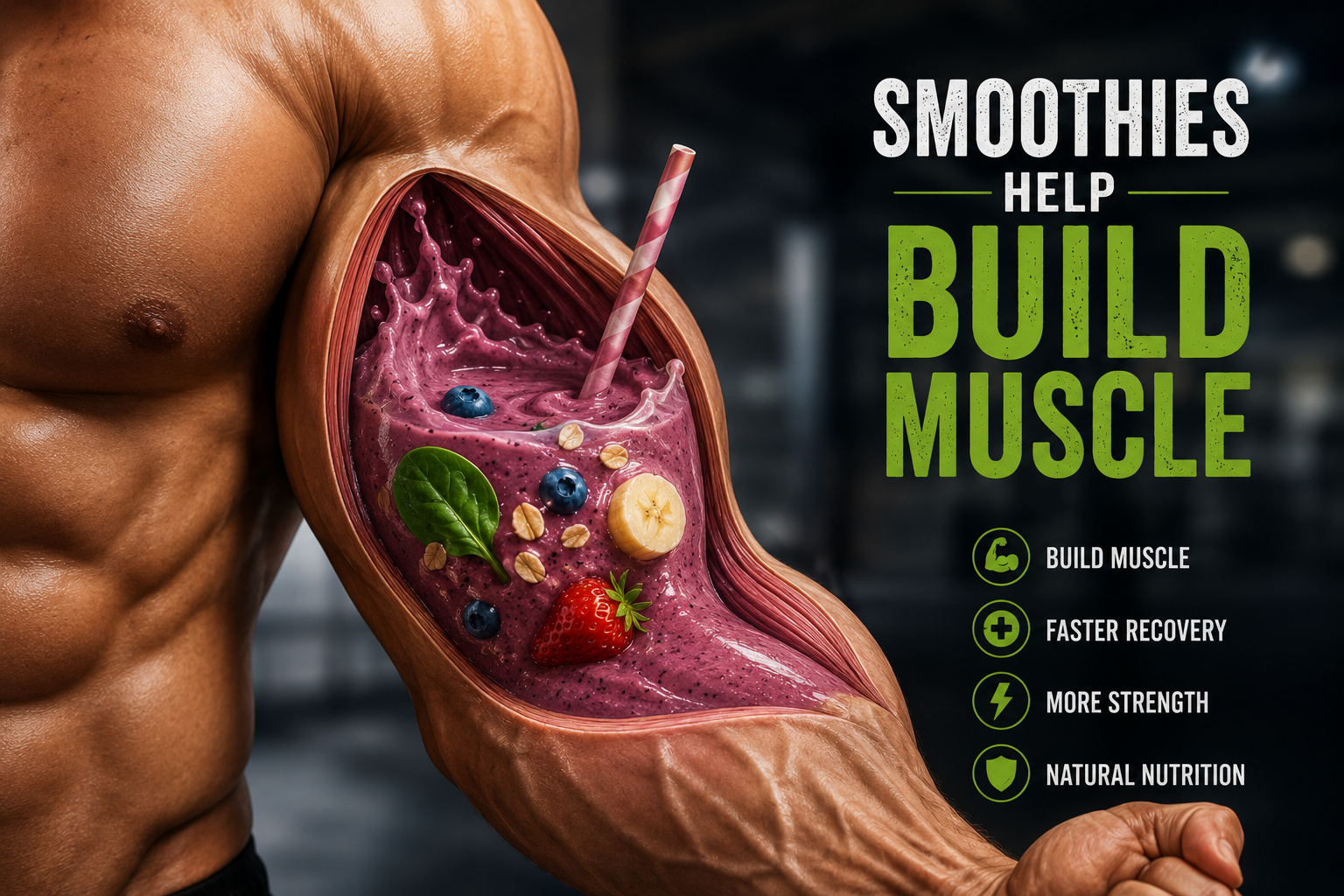
Smoothies for muscle recovery are becoming a popular choice among fitness enthusiasts because they offer a quick and nutritious way to refuel the body after exercise.
Building muscle is not only about lifting heavier weights or spending more hours in the gym. Nutrition plays a major role in muscle growth, recovery, and overall performance. Many people focus on protein powders and supplements, but natural whole foods can also provide excellent support.
Smoothies are quick, convenient, and packed with nutrients that help your body recover after exercise. Whether you are a beginner starting your fitness journey or someone trying to maintain muscle as you age, the right smoothie ingredients can support muscle recovery naturally.
But can smoothies actually help build muscle?
The short answer is YES– when they are made with the right ingredients and combined with proper strength training and balanced meals.
In this article, we will explore how smoothies for muscle recovery support muscle growth, the science behind muscle recovery, and five powerful ingredients you can add to your smoothie naturally.
How Muscle Growth Actually Happens
Before discussing smoothies, it is important to understand how muscle grow.
When you perform resistance exercises such as :
- Weightlifting
- Bodyweight training
- Resistance band workouts
- High-intensity interval training
Your muscle fibers experience tiny tears.
This sounds alarming, but it is completely normal.
After your workout, your body begins repairing those muscle fibers. During this repair process is called Muscle Protein Synthesis.
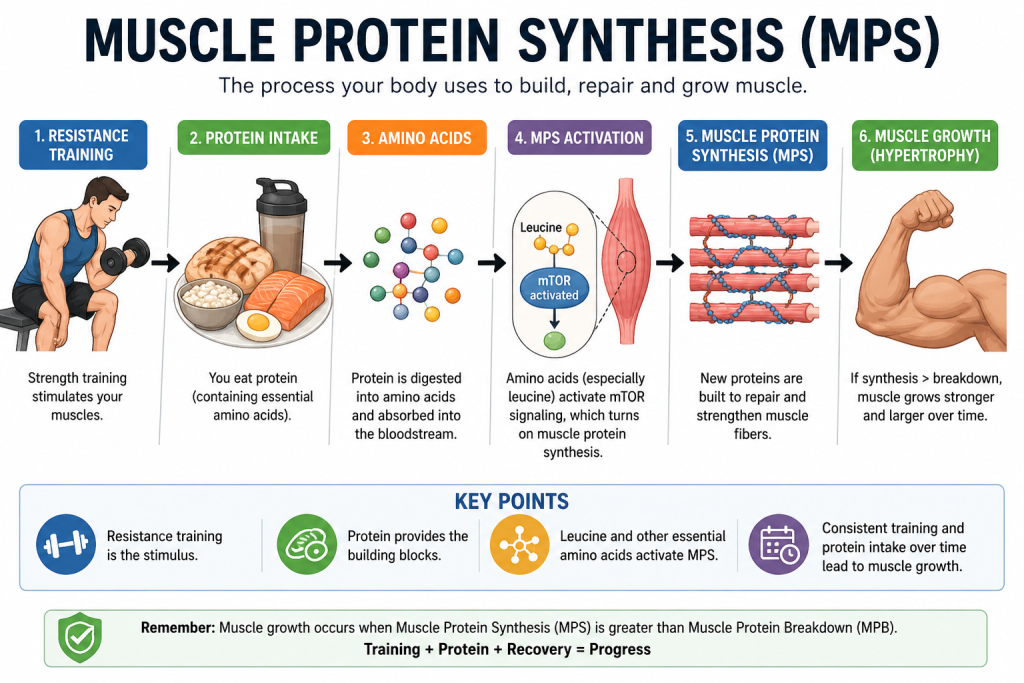
To recover effectively, your body needs:
- Protein for muscle repair
- Carbohydrates to restore energy
- Healthy fats for hormone support
- Vitamins and minerals to reduce inflamation
- Hydration to maintain performance
Without proper nutrition, your recovery may slow down and muscle growth can become difficult.
This is where smoothies for muscle recovery become useful.
Why Smoothies Are Great for Muscle Recovery
1. Easy to Digest After Exercise
After intense exercise, some people do not feel hungry enough to eat a full meal.
A smoothies is easier to consume because it is liquid-based and lighter on the stomach.
For example:
Imagine finishing a one-hour gym session and feeling too tired to cook grilled chicken and rice. A smoothies made with banana, milk, yogurt and oats can provide nutrients immediately.
2.Quick Nutrient Delivery
Blended smoothies help deliver carbohydrates, protein, and micro-nutrients quickly after exercise.
This matters because many fitness experts recommend eating within a recovery window after workouts.
A smoothies for muscle recovery can be prepared in under five minutes.
3.Helps Busy People Stay Consistent
Many working adults skip post-workout meals because of busy schedules.
Jason works a full-time office job and goes to the gym before work at 6 a.m. He often skipped breakfast because he had no time to cook.
He started preparing overnight smoothie packs containing bananas, berries, oats, and Greek Yogurt.
Every morning after the gym, he blends the ingredients and drinks it on the way to work.
After three months, he noticed:
- Better workout energy
- Less soreness
- Gradual muscle gain
Consistency made the difference.
Can Smoothies Replace Meals ?
NOT ALWAYS.
Smoothies work best as
- Post-workout recovery drinks
- Healthy snacks
- Convenient breakfast options
They should always still be part of a balanced diet that includes whole foods like:
- Lean meats
- Eggs
- Vegetables
- Rice
- Potatoes
- Fish
- Nuts
Think of smoothies for muscle recovery as a supportive tool- Not Your Entire Diet.
5 Ingredients That Support Recovery Naturally
1. Greek Yogurt
It contains:
* High -quality protein
* Calcium
* Probiotics
* Amino acids
Protein helps repair damaged muscle fibers after workouts.
2. Bananas
Carbohydrates help replenish glycogen stores after exercise.
Potassium helps support muscle function and reduce cramping.
3. Oats
They help:
* Refill energy stores
* Keep you full longer
* Provide steady energy release
They are a great addition to smoothies for muscle recovery, especially for those trying to gain muscle mass.
4. Berries
Exercise creates oxidative stress in the body.
Antioxidants help reduce inflammation and support recovery.
5. Spinach
* Iron
* Magnesium
* Vitamin C
* Antioxidants
These nutrients support muscle function, oxygen transport, and recovery.
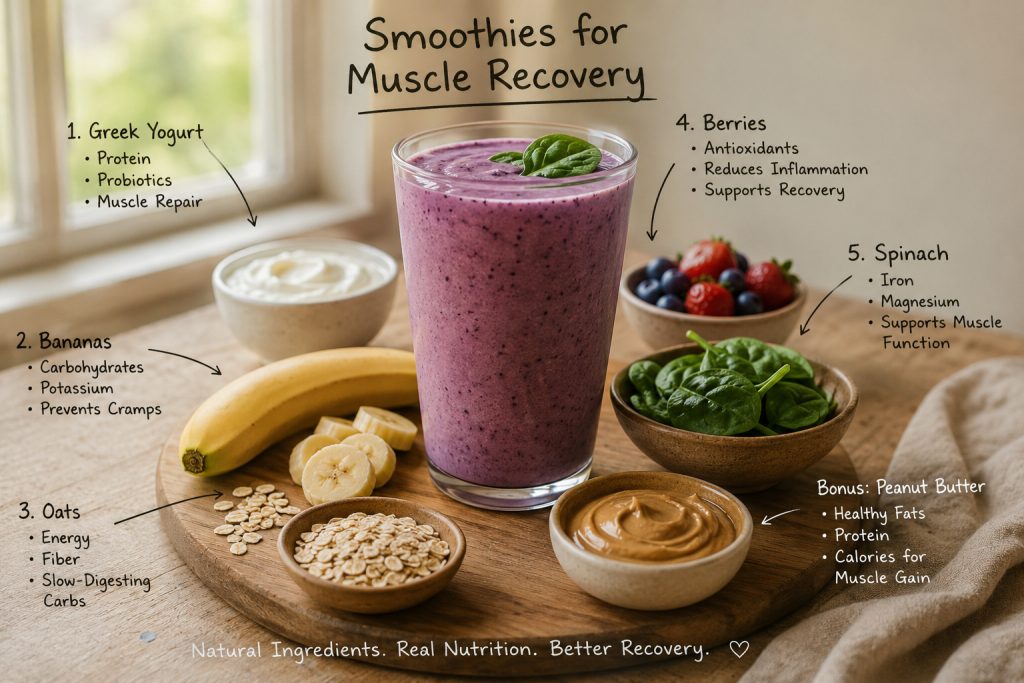
Although this article focuses on FIVE ingredients, peanut butter deserves mention.
It contains:
- Healthy fats
- Protein
- Calories for muscle gain
According to the Harvard T.H. Chan School of Public Health, peanut and peanut butter can be part of a healthy diet due to their nutrient-rich profile.
Peanut butter also helps increase overall calorie intake, making it useful for people trying to gain lean muscle. It blends easily into smoothies for muscle recovery, adding a creamy texture and long-lasting energy,
Best Time to Drink Muscle Recovery Smoothies
- After workouts (most effective timing)
- Breakfast (to start your day with energy)
- Between meals (to increase calorie intake)
Common Mistakes People Make
Adding Too Much Sugar
Avoid adding :
- Ice cream
- Too much syrup
- Sugary flavored yogurt
Ignoring Protein
Fruit-only smoothies may taste good buy may not provide enough protein for muscle recovery.
Depending Only on Smoothies
Even the best smoothies for muscle recovery cannot replace proper meals and resistance training.
Sample Recipe Smoothies for Muscle Recovery
Natural Muscle Builder Smoothies
Ingredients:
* 1 Banana
* 1/2 cup oats
* 1 cup Greek yogurt
* 1 tablespoon peanut butter
* 1/2 cup berries
* Handful of spinach
* 1 cup milk
Instructions:
~ Add all ingredients into a blender
~ Blend until smooth
~ Drink after workouts
Do You Need Protein Powder?
NOT NECESSARILY!
Whole foods can provide enough nutrients for many people.
Protein powder may help those who :
- Have higher protein needs
- Are very busy
- Struggle to meet daily protein goals
But Smoothies For Muscle Recovery made from natural ingredients remain an excellent option.
Final Thoughts
So, can smoothies help build muscle?
YES!-but only when paired with:
- Strength training
- Proper sleep
- Balanced meals
- Consistency
Smoothies alone will not build muscles overnight.
However, smoothies for muscle recovery make recovery easier, improve nutrient intake, and help busy individuals stay on track.
By using natural ingredients like Greek Yogurt, bananas, oats, berries, and spinach, you can support muscle recovery without relying heavily on supplements.
Sometimes the simplest habits create the strongest results.
To explore more on SMOOTHIES and PROTEIN, you can view below links:
>>> How Much Protein Do You Need After 50 to Prevent Muscle Loss?
>>>5 Powerful Benefit of Smoothies: Easy Nutrition for a Healthier Lifestyle
Leave a Reply