Category: Healthy Living

  • 10 Healthy Habits for Busy Professionals

    10 Healthy Habits for Busy Professionals

    Introduction

    Building healthy habits for busy professionals can feel overwhelming when your schedule is packed with meetings, deadlines, and responsibilities. Many professionals struggle to balance work, health and personal life, often sacrificing well-being for productivity.

    The truth is, you don’t need a complete lifestyle overhaul to stay healthy. Small, consistent habits can significantly improve your energy, focus, and overall well-being.

    In this guide, we’ll explore 10 simple yet powerful habits you can incorporate into your daily routine – no matter how busy you are.

    Healthy Habits

    1. Start Your Day with Hydration

    One of the easiest yet most overlooked habits is drinking water first thing in the morning. Hydration helps kickstart your metabolism, improve brain function, and boost energy levels.

    According to Mayo Clinic, proper hydration supports essential bodily functions, including digestion and temperature regulation.

    Tip: Keep a glass of water beside your bed so you can drink it immediately after waking up.

    2. Prioritize Short Morning Movement

    You don’t need a full workout to feel energized. A quick 5 – 10 minutes movement routine can wake up your body and improve blood circulation.

    Simple exercises include:

    • Stretching
    • Bodyweight squats
    • Arm circles
    • Light yoga

    These movements help reduce stiffness and prepare your body for a productive day.

    3. Plan Your Day with Intent

    Busy professionals often jump straight into work without plan, leading to stress and inefficiency.

    Take 5 minutes each morning to:

    • List your top 3 priorities
    • Schedule key tasks
    • Allocate time blocks

    This habit improves focus and reduces decision fatigue throughout the day.

    4. Take Micro-Breaks Throughout the Day

    Sitting for long hours can negatively affect your health and productivity. Research from the American Heart Association shows that prolonged sitting increases health risks.

    Solutions:

    • Stand or stretch every 60 – 90 minutes
    • Walk around during phone calls
    • Do quick desk stretches

    These small breaks improve blood circulation, reduce fatigue, and keep your mind sharp.

    Healthy Habits - Dense Meal

    5. Eat Balanced, Nutrient-Dense Meals

    Nutrition plays a major role in maintaining energy and focus. Instead of relying on fast food or processed snacks, aim for balanced meals.

    Include:

    • Lean proteins (chicken breast, fish, tofu or eggs)
    • Whole grains (brown rice, oats)
    • Vegetables and fruits

    For busy days, a quick smoothie can provide essential nutrients without taking much time.

    6. Stay Consistently Hydrated

    Beyond your morning glass water, hydration should continue throughout the day.

    Tips:

    • Carry a reusable water bottle
    • Set reminders if needed
    • Drink water before meals

    Staying hydrated helps prevent fatigue and improves concentration – key for maintaining productivity.

    7. Practice Mindfulness or Deep Breathing

    Stress is a common challenge for busy professionals. Taking a few minutes for mindfulness can significantly improve mental clarity and emotional balance.

    Simple methods:

    • Deep breathing exercises
    • Short meditation sessions
    • Quiet reflection time

    Even 3 – 5 minutes can reduce stress and improve focus.

    8. Limit Screen Time and Digital Distractions

    Constant notifications and screen exposure can drain your energy and reduce productivity.

    Healthy habits include:

    • Turning off non-essential notifications
    • Scheduling ” no-screen ” breaks
    • Using focus apps or timers

    Reducing distractions helps you work more efficiently and maintain mental clarity.

    9. Build a Consistent Sleep Routine

    Sleep is often neglected, yet it’s one of the most important aspects of health. Poor sleep affects energy, mood, and performance.

    Improve sleep by:

    • Going to bed at the same time each night
    • Avoiding screens before bed
    • Creating a relaxing bedtime routine

    Quality sleep supports both physical and mental recovery.

    10. Reflect and Reset Daily

    At the end of each day, take a few minutes to reflect:

    • What did you accomplish?
    • What can be improved tomorrow?
    • What are your priorities for the next day?

    This habit helps you stay organized, reduce stress, and continuously improve your routine.

    How These Healthy Habits Fit into Your Daily Routine

    These healthy habits for busy professionals are most effective when combined into a structured routine. Instead of trying to implement everything at once, start small:

    • Week 1: Focus on hydration and morning movement
    • Week 2: Add planning and micro-breaks
    • Week 3: Improve nutrition and sleep

    For a complete structured plan, check out Healthy Daily Routine for Busy Professionals

    Conclusion

    Developing healthy habits for busy professionals doesn’t require drastic changes. By incorporating small, consistent actions into your daily life, you can significantly improve your energy, focus, and overall well-being.

    Start with one or two habits, build consistency, and gradually expand your routine. Over time, these habits will become second nature, helping you stay productive and healthy – even with a demanding schedule.

    For additional guidance, explore Morning Routine for Busy Professionals.

  • Healthy Daily Routine for Busy Professionals – (No Gym Required)

    Healthy Daily Routine for Busy Professionals – (No Gym Required)

    Introduction

    Maintaining a busy professionals routine can feel challenging when your schedule is packed with meetings, deadlines, and responsibilities. Many professionals struggle to find time for exercise, healthy meals, and proper rest. Over time, this can lead to fatigues, stress, and decreased productivity.

    The good news is that building a healthy lifestyle doesn’t require drastic changes or hours at the gym. With a structured yet flexible approach, you can develop a busy professionals routine that supports your energy, focus, and overall well-being.

    This guide will walk you through practical strategies you can implement immediately – from morning habits and hydration to workday productivity and evening recovery.

    By implementing these habits consistently, you can improve energy, focus, and your overall quality of life.

    Why a Busy Professionals Routine Matters

    For professionals with demanding schedules, a structured routine is more than just a wellness tip – it’s essential for long term health. Sitting for long periods increases the risk of poor posture, fatigue, heart disease, metabolic issues, and even chronic pain.

    According to the American Heart Association, even brief breaks from sitting significantly reduce these risks.

    A well-structured routine helps reduce decision fatigue and creates consistency in your daily life. When your habits are predictable, your body and mind operate more efficiently.

    A consistent busy professionals routine strengthens and helps:

    • Improve energy levels throughout the day.
    • Enhance focus and productivity.
    • Reduce stress and mental fatigue.
    • Support long-term physical health.

    1. Easy Morning Movements to Start Your Day Effectively

    Starting your day with movement sets a positive tone and activates your body. You don’t need a full workout – just a few minutes can make a differences.

    The simple morning routine:

    • Neck & shoulder rolls (1 min): Relieves tension from sleeping.
    • Cat-cow stretch (2 min): Enhances spine mobility and flexibility.
    • Bodyweight squats (2 min): Boosts blood circulation & energy.
    • Arm circles (1 min): Opens shoulders & improves posture.

    Tip: Pair these movements with deep breathing to energize your body and mind. Over time, this quick morning routine becomes a natural part of your busy professionals routine.

    In addition, these movements also improve circulation, reduce stiffness, and prepare your body for the day ahead. Over time, this becomes a foundational part of your busy professionals routine.

    Busy Professionals Routine

    2. Micro-Movements Throughout the Day

    One of the biggest challenges for professionals is prolonged sitting. The solution is not necessarily long workouts – but frequent small movements.

    Even if you can’t leave your desk, small movements help combat the negative effects of prolonged sitting:.

    Examples of micro-movements:

    • Stand up for 1 – 2 minutes every hour.
    • Do a few desk stretches: shoulder rolls, seated twists, or leg extensions.
    • Walk around your office or home during calls or breaks.
    • Take stairs instead of elevators whenever possible.

    These micro-movements reduce stiffness, improve circulation, and enhance focus. They are essential to a sustainable busy professionals routine.

    3. Hydration Tips and Energy Management for Busy Professionals

    Hydration plays a crucial role in maintaining energy and mental clarity. Even mild dehydration can cause fatigue, reduced concentration, and harmful to overall health. Drinking water consistently prevents fatigue, headaches, and mental fog.

    According to the Mayo Clinic, proper hydration supports digestion, temperature regulation, and overall bodily function.

    Daily hydration tips:

    • Start your day with a glass of water.
    • Keep a water bottle at your desk for regular sips.
    • Set reminders if you often forget to drink.
    • Consider a homemade nutritionalsmoothie drink after intense work sessions or late nights for additional vitamins and minerals. It’s a quick way to replenish vitamins and maintain energy levels.

    In addition, hydration is a cornerstone of a sustainable busy professionals routine.

    4. Nutrition Tips for Energy and Focus

    Eating healthy doesn’t need to be complicated. The key is consistency and preparation.

    Fueling your body with the right foods helps maintain steady energy levels and cognitive function.

    Simple nutrition principles:

    Prioritize whole foods over processed options which include protein, healthy fats, and fiber in your meals.

    • Balanced meals: Lean proteins, whole grains, and vegetables.
    • Healthy snacks: Nuts, fruits, yogurt, or smoothies for sustained energy. Always keep them within reach.
    • Meal prepping: Save time by preparing lunches or snacks in advance.
    • Smart beverages: Avoid excessive caffeine; choose herbal teas or smoothies.

    Quick meal ideas:

    • Grilled chicken with vegetables.
    • Brown rice with tofu and greens.
    • Salad with avocado and nuts.

    Smoothies are especially useful for busy schedules. They’re fast, portable, and nutrient-dense-making them a practical addition to your busy professionals routine.

    Homemade Smoothie - Busy Professionals Routine

    5. Boost Your Mornings: Mini Routine

    Even a few focused minutes in the morning can set the tone for your day.

    Simple Mini Routine Tips:

    • Drink a glass of water immediately after waking.
    • Perform a 5 – 10 minutes stretch or movement sequence.
    • Write down your top 3 priorities for the day.
    • Take 1 – 2 minutes for mindful breathing or meditation.

    For more structured guidance, see Morning Routine for Busy Professionals. Implementing a small, consistent morning routine is a key component of a productive busy professionals routine.

    6. Smart Workday Strategies

    A healthy routine isn’t just physical – it also includes mental performance. Managing your time effectively reduces stress and increases output.

    Maximize your focus and efficiency with these practical strategies & effective techniques:

    • Time blocking: Schedule dedicated periods for deep work and breaks.
    • Pomodoro technique: Work in focused 25-minutes intervals with short breaks.
    • Avoid multitasking: Focus on one task at a time to increase quality and speed.
    • Healthy screen habits: Use blue-light filters, reduce distractions, and take eye breaks.

    By structuring your workday, you can maintain energy and avoid burnout, reinforcing your busy professionals routine.

    7. Evening Wind-Down Routine for Recovery

    Your evening habits determine how well you recover for the next day. A proper wind-down routine improves sleep quality and mental clarity.

    Simple evening routine:

    • Dim lights and avoid screens at least 30 minutes before bed.
    • Light stretching or yoga to release tension.
    • Reflect on the day’s accomplishments.
    • Plan 1 – 2 key tasks for tomorrow.

    A consistent evening wind-down ensures your body and mind are ready for the next day, reinforcing a sustainable busy professionals routine.

    8. Stress Management for Busy Professionals

    Stress can quickly undermine your productivity and energy.

    Simple habits to manage stress include:

    • Daily meditation or deep breathing exercises.
    • Journaling to process thoughts and plan priorities.
    • Short walks outside for sunlight and fresh air.
    • Listening to calming music during breaks.

    Managing stress effectively is a key pillar in maintaining a consistent busy professionals routine.

    9. Building Consistency Over Time

    The key to success is consistency, not perfection. Many people fail because they try to change everything at once.

    Better approach:

    • Start with 1 – 2 habits.
    • Build gradually.
    • Stay consistent rather than perfect.

    Overtime, these small habits compound into significant improvements in health, productivity, and energy.

    Conclusion

    Creating a sustainable busy professionals routine is one of the most effective ways to improve your daily life. You don’t need extreme workouts or strict diets-just consistent, practical habits that fit your schedule.

    By focusing on movement, hydration, nutrition, productivity, and recovery, you can build a routine that supports both your career and your health.

    For more actionable strategies, explore:

    Start today, stay consistent, and your busy professionals routine will transform your energy, focus, and overall well-being.

  • 7 Exercises to Perform Daily to Improve Heart Health and Overall Fitness

    7 Exercises to Perform Daily to Improve Heart Health and Overall Fitness

    Heart Health is not just about avoiding disease, it underpins energy levels, mental clarity and life span. Managing it proactively is one of the Highest Value Investments we can make in our Heart Health and Overall Fitness.

    In addition, Heart Health is fundamental because the heart is the central pump that sustains every organ system. When it’s compromised, the effects cascade throughout the body.

    Here’s a precise breakdown of why maintaining Heart Health and Overall Fitness is so Critical :

    • To Prevent Major Diseases. Poor Heart Health is strongly linked to conditions such as Coronary Artery Disease, Heart Attack, Stroke & Hypertensions. These are among the leading causes of Fatality globally, but many are preventable through Lifestyle Management.
    • Ensures Efficient Oxygen & Nutrients Delivery. Our Heart maintains systemic blood circulation. If cardiac output drops, tissues receive less oxygen and glucose, leading to Fatigue, Organ Dysfunction and Long-term Damages.
    • Supporting Brain Function. There is a direct connection between Cardiovascular Health and Cognitive Performance. If reduced blood flow, then increases the risks of Memory Decline, Vascular Dementia & Weaken Concentration.
    • Strong Heart Health Improves Longevity & Quality of Life. A Healthy Heart Health allows us to stay physically active longer, reduce hospitalizations and maintain independence into old age.
    • Reduces Our Health Care Costs & Financial Burdens. A chronic heart condition requires long term Treatments such as medications, procedures and monitoring, which can be financially and emotionally burdens.
    • Heart Health Closely Linked to Lifestyle Factors. It reflects overall lifestyle quality like: stress levels, physical inactivity, smoking and alcohol use and diet.
    • Early Prevention Is a Must. Unlike many diseases, cardiovascular issues often develop silently over years that we called it Silent Killer. Prevention strategies like healthy diet, regular exercises and frequent body checkup will significantly reduce risk before symptoms appear.

    7 Exercises to Improve Heart Health and Overall Fitness

    In order to achieve the goals to improve Heart Health and Overall Fitness, the routine should bias towards aerobic conditioning, muscular endurance and blood circulation while still maintaining strength and mobility. A well-rounded daily protocol would include these 7: –

    Brisk Walk for Heart Health and Overall Fitness

    1. Brisk Walking

    Brisk walking sits in the moderate-intensity aerobic zone, which is the most evidence backed range for improving cardiovascular function without excessive strain. Its impact is both on heart and vessels and whole-body fitness.

    The Benefits of Brisk Walking are: –

    • Improve Cardiac Efficiency. Regular brisk walking strengthens the heart muscle, allowing it to pump more blood per beat resulting in lower resting heart rate and reduced cardiac workload overtime.
    • Enhances Blood Circulation & Vascular Function. It promotes better endothelial function and improving oxygen delivery to tissues and this reduces risk of hypertension and arterial stiffness.
    • Lowering Major Risk Factors. Consistent brisk walking may lower or reduce in blood pressure, bad cholesterol (LDL), triglycerides, heart attack, stroke and coronary artery disease.

    Performing Target: 20 to 45 minutes at any pace you like.

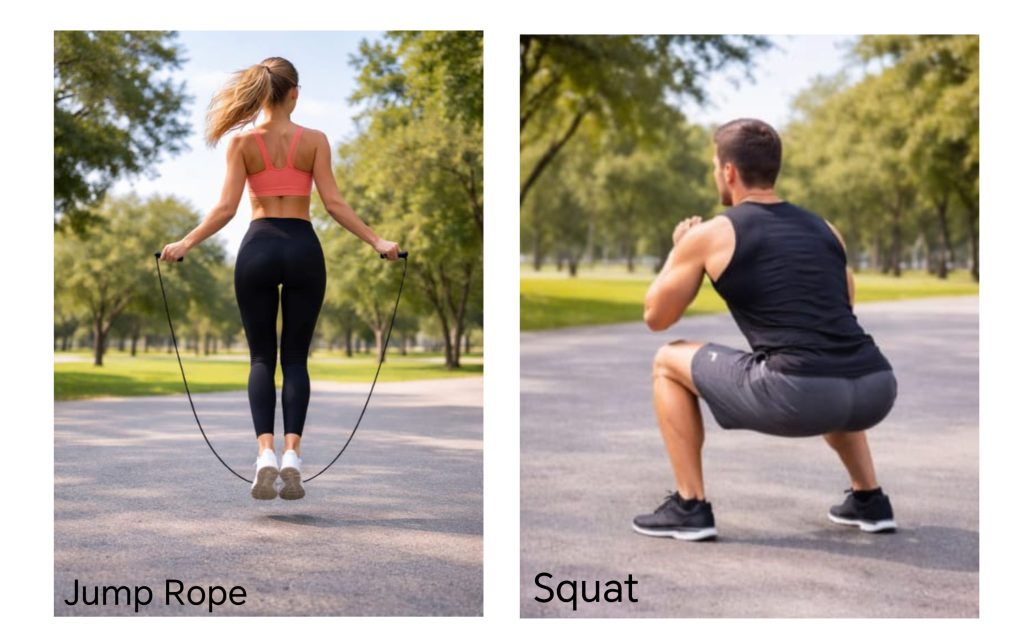
    2. Jump Rope

    Jump rope delivers strong heart benefits, better coordination and efficient calorie burn in just a few minutes per day.

    The Benefits of Jump Rope are: –

    • It Improves Cardiovascular Fitness. Rapidly elevates heart rate into an optimal training zone, strengthens heart and improves blood circulation. Importantly, it helps to reduce risk of cardiovascular disease.
    • Boosts Coordination & Agility. Jump rope requires timing between hands, feet and eyes, it enhances balance and neuromuscular control.
    • High Calorie Burn & Efficiency. Everytime when we are performing jump rope, it can burn significant calories in a short time, support fat loss and metabolic health which is ideal for quick and effective workouts.

    Performing Target: 3 to 5 minutes with interval style.

    Jump rope & Squat for Heart Health and Overall Fitness

    3. Squat

    Squats are not just strength, it is also supporting heart health through increased blow flow, building functional lower body power and improves metabolic efficiency.

    The Benefits of Performing Squat are: –

    • Enhances Blood Circulation & Cardiovascular Demand. Squats engage large muscle groups which required significant blood flow. This increases heart rate and improves overall blood circulation. And it also supports cardiovascular conditioning especially when doing in higher reps.
    • Building Lower Body Functional Fitness & Strength. By performing squats, will strengthens muscles used in daily activities such as standing, walking and lifting. It also improves our balance and stability.
    • Boosts Metabolic Health. Squats will improve insulin sensitivity and support fat metabolism. It also contributes to weight management and overall fitness.

    Performing Target: 2 to 3 sets of 12 to 15 reps each.

    4. Push-Up

    Push-up develops strength, core stability and endurance, making them a highly efficient full body exercise with added heart health benefits when performing consistently.

    The Benefits of doing Push -Up are:-

    • Push-up Builds Upper Body Strength. It targets chest, shoulders and triceps. It also engages supporting muscles for stability. In addition, it is improving overall pushing strength and daily functional movements.
    • It Enhances Core Stability. Push-up requires maintaining a rigid body position and activates abdominal and lower back muscles.
    • Supports Cardiovascular & Muscular Endurance. If we done in moderate to high reps will elevates heart rate. Besides, it also improves muscular endurance overtime.

    Performing Target: 2 to 3 sets of 10 to 20 reps each.

    Push up & Plank for Heart Health and Overall Fitness

    5. Plank

    Planks strengthen the core, breathing control, and endurances which indirectly supports Heart Health and Overall Fitness by improving efficiency and stability during physical activities.

    The Benefits of Performing Planks are:-

    • Supports Breathing & Heart Efficiency. Plank encourages controlled, steady breathing under tension and also enhances coordination between core muscles and respiration – It helps the body use oxygen more efficiently during daily activities.
    • Builds Muscular Endurance. It trains muscles to sustain effort overtime, improves overall stability during other exercises and contributing to better performance and reduce fatigue.
    • Improves Core Stability & Posture. Plank helps strengthen deep curve muscles such as abdominal & lower back and helps maintain proper spinal alignment. Furthermore, reducing strain on the body and improving movement efficiency.

    Performing Target: 2 sets of 30 to 60 seconds.

    6. Lunges

    Lunges develop balance, blood circulation, and functional strength, making them highly effective for both Heart Health and Overall Fitness.

    The Benefits of Performing Lunges are: –

    • Improve Balance & Stability. Performing lunges can train each leg independently. It engages stabilizer muscles and also enhances coordination which reducing risk of falls or injury.
    • Enhances Blood Circulation & Heart Health and Overall Fitness. By doing Lunges can activates large lower-body muscles and increase blood flow as well as cardiovascular demand. It also supports better blood circulation and heart function.
    • Building Functional Strength. Lunges can strengthen quads, glutes and hamstrings that improves overall mobility and daily performance.

    Performance Target: 2 to 3 of 10 to 15 reps per leg.

    Stretches & Lunges for Heart Health and Overall Fitness

    7. Stretches

    Stretching supports mobility, recovery, and injury prevention. Making it essential for maintaining Heart Health and Overall Fitness and also long-term physical health.

    The Benefits of Stretching are: –

    • Reduces Muscle Stiffness & Injury Risk. Stretching relieves tension in key muscle groups and improves muscle elasticity so as lowers the likelihood of strains and injuries.
    • Enhances Blood Flow & Recovery. Stretching promotes blood circulation to muscles and helps deliver nutrients and remove waste. At the same time speeds up recovery and reduces sorness.
    • Improves Flexibility & Range of Motion. It also lengthens muscles and reduces tightness. Besides, it enhances joint mobility to allow smoother, more efficient movement.

    Performance Target: 5 to 10 minutes (focusing on hamstrings, chest, hips, and shoulder).

    Incorporating daily exercises significantly enhances Heart Health and Overall Fitness. Committing to one or two of the recommended exercises fosters a sustainable routine, promoting not only cardiovascular well-being but also resilience against chronic illnesses. Prioritizing prevention through consistent physical activity is crucial for long-term health benefits.

    In conclusion, Prevention is always more Effective Than Cure!

    To read more about Healthy Life Topic please do not hesitate to click here. Thank you