Author: Sean & Mavis

  • Homemade Cooking Habits : 7 Simple Ways to Eat Healthier Every Day

    Homemade Cooking Habits : 7 Simple Ways to Eat Healthier Every Day

    Why Homemade Cooking Habits Matter

    In today’s fast-paced world, many people depend on fast food, delivery meals, and processed snacks. While convenient, these foods often contain excessive salt, sugar, and unhealthy fats that can slowly affect long-term health.

    Developing homemade cooking habits is one of the most effective lifestyle changes you can make. It does not require advanced cooking skills or expensive ingredients. Instead, it is about consistency, awareness, and making better daily food choices.

    Cooking at home gives you full control over your ingredients, portion sizes, and cooking methods. This helps improve digestion, maintain a healthy weight, increase energy levels, and reduce the risk of chronic diseases.

    The goal is not perfection – but progress through small daily habits that last.

    Meal planning is the foundation of healthy cooking habits. Without planning, it is easy to fall back into unhealthy food choices.

    Start small:

    • Plan 3 to 5 meals per week
    • Keep meals simple and realistic
    • combine protein, carbohydrates, and vegetables

    Example meals:

    • Grilled chicken with vegetables and rice
    • Egg stir-fry with mixed greens
    • Oatmeal with fruits and nuts

    Meal planning helps reduce stress, saves money, and ensures you always have a healthy option available. Over time, this habit becomes the backbone of your Homemade Cooking Habits lifestyles.

    Healthy cooking starts before you enter the kitchen – it begins at the grocery store.

    Focus on whole, natural foods:

    • Fresh vegetables like spinach, carrots, and broccoli
    • Lean proteins such as chicken, fish, tofu, and eggs
    • Whole grains like brown rice, oats, and quinoa
    • Healthy fats like olive oil, nuts, avocado

    Try to avoid:

    • Processed frozen meals
    • sugary drinks and snacks
    • Foods with long ingredients lists

    A simple rule : if the ingredients look artificial or overly processed, it is better to avoid them. Fresh ingredients improve both nutrition and flavor naturally.

    Many people give up cooking because they think healthy meals are complicated. In reality, simplicity leads to consistency.

    You don’t need fancy recipes. focus on:

    • 5 to 7 ingredients per meal
    • Quick cooking methods like stir-frying, steaming, or grilling
    • Basic seasoning using herbs and spices

    Example simple dish: Chicken + Garlic + Vegetables + Soy Sauce + Rice

    Simple homemade meal
    Grill Chicken on top ; cabbage fry with garlic + Soy Sauce ; Rice at the bottom

    Simple cooking reduces stress and helps you stay consistent. The goal is to make cooking easy enough that you can repeat it daily without pressure.

    Health experts like the World Health Organization highlight the importance of balanced nutrition and reducing processed ingredients.

    One of the biggest benefits of homemade cooking habits is control over ingredients.

    Restaurant and processed foods often contain:

    • High levels of salt for taste enhancement
    • Hidden sugar in sauces and drinks
    • Unhealthy oils used for deep frying

    At home, you make healthier choices:

    • Use Herbs, garlic, and spices instead of excess salt
    • Replace refined sugar with natural sweetness like fruit or honey
    • Choose healthier oils such as olive or coconut oil

    Homemade cooking healthier choices

    These small adjustments can significantly improve heart health, blood pressure, and overall well-being over time.

    According to the World Health Organization, reducing salt, sugar, and unhealthy fats is essential for long-term health. Similarly, Harvard T.H.Chan School of Public Health emphasizes the importance of balanced meals and whole ingredients when building sustainable eating habits.

    Meal prepping is one of the most effective strategies for maintaining healthy eating habits.

    Instead of cooking everyday, you can prepare meals in advance.

    Benefits include:

    • Saves time during busy weekdays
    • Reduces the temptation to order fast food
    • Helps control portion sizes
    • Ensures balanced nutrition

    Example: Cook chicken, rice, and vegetables in bulk and store them in containers for 2-3 days.

    This method supports consistency and make your homemade cooking habits easier to maintain even with a busy lifestyles.

    Healthy eating does not mean giving up all treats. The key is making better versions at home.

    Instead of buying processed desserts, try:

    • Whole grain bread
    • Banana cakes with natural sweetness
    • Low-sugar muffins
    • Oat cookies

    Homemade baking allows you to:

    • Control sugar and fat levels
    • Avoid preservatives
    • Use healthier ingredients

    It also turns cooking into a creative and enjoyable activity, not just a daily task.

    If you’re new baking, you can start with a Beginner’s Guide to Home Baking: Easy Recipes and Daily Baking Tips, where simple recipes and practical tips help you build confidence in the kitchen.

    The final step is mindset.

    Cooking should not feel like an obligation. It should become part of your lifestyle.

    Start with small actions:

    • Cook at least one meal at home daily
    • Slowly increase home cooked meals over time
    • Make cooking enjoyable with music or family involvement
    • Try new recipes occasionally

    Consistency matters more than perfection. Over time, cooking becomes a natural habit rather than something you force yourself to do.

    ? FAQ Section

    1. What are homemade cooking habits?

    They are daily practices of preparing meals at home using fresh and healthy ingredients.

    2. Why is cooking at home healthier ?

    Because you control ingredients, portion sizes, and avoid processed foods.

    3. Can beginners start cooking at home easily?

    YES, by starting with simple recipes and basic ingredients.

    4. Does home cooking help with weight control?

    YES, it helps regulate calorie intake and improve nutrition balance.

    Understanding the Why Homemade Food is Better: Healthy Cooking Benefits You Should Know can also motivate you to stay consistent, as it highlights the long-term health benefits of cooking at home.

    Building strong Homemade Cooking Habits is one of the most sustainable ways to improve your health naturally. It does not require strict dieting or complicated recipes. Instead, it is about making small, consistent improvements everyday like meal planning, choosing fresh ingredients, and cooking simple meals.

    Over time, these habits will improve your energy, support weight management, and reduce health risks. Most importantly, it helps you build a sustainable lifestyle that you can maintain for years.

    Healthy living begins in your kitchen – and every meal is a new opportunity to take care of your body.


  • Morning Routine for Busy Professionals That Actually Works

    Morning Routine for Busy Professionals That Actually Works

    Introduction

    A successful morning routine for busy professionals is not about perfection – it’s about control. Most professionals don’t fail because they lack discipline; they fail because their mornings are reactive instead of intentional.

    When you wake up and immediately check emails, respond to messages, or rush into tasks, your day is already being dictated by external demands. This leads to stress, poor focus, and constant mental fatigue.

    The goal of a morning routine is simple: Take control before the world takes control of you.

    This article focuses on building a realistic, high-impact routine designed specifically for professionals with limited time, high responsibility, and unpredictable schedules.

    1. The Real Problem: Reactive Mornings

    Most people underestimate how damaging reactive mornings are.

    When your first actions are:

    • Checking your phone
    • Reading emails
    • Responding to messages
    No phone - Morning Routine for Busy Professionals

    You are immediately putting your brain into response mode, not decision mode.

    This creates:

    • Mental overload early in the day
    • Reduced ability to prioritize
    • Increased stress levels

    A strong morning routine for busy professionals eliminates this pattern by delaying reaction and prioritizing intention.

    Starting your day in a reactive state increases stress levels and reduces focus over time, as explained by the American Psychological Association.

    2. The Control Framework (Instead of a Checklist)

    Forget long routines. Instead, use a 3-part control framework:

    1. Stabilize your state (body + mind)
    2. Eliminate unnecessary decisions
    3. Define direction before action

    This approach is more effective than following rigid step-by-step routines because it adapts to your schedule.

    3. Stabilizing Your Mental State

    Before doing anything productive, you need to stabilize your mental state.

    Your brain wakes up in a slightly disoriented condition. Jumping straight into tasks increases cognitive stress.

    Instead, create a short buffer zone:

    • Sit quietly for 2 – 3 minutes
    • Focus on slow breathing
    • Avoid all external input

    This helps your brain transition smoothly from rest to alertness.

    Professionals who skip this step often feel ” rush ” all day, even when they are not actually short of time.

    4. Delay Input, Increase Output

    One of the most powerful habits you can build is delaying input.

    Input includes:

    • Emails
    • Messages
    • News
    • Social media

    When you consume input too early, you lose control of your priorities.

    Rule:

    Do not check your phone for the first 20 – 30 minutes.

    This simple change dramatically improves focus and decision making.

    A high-performing morning routine for busy professionals protects mental space before allowing distractions.

    5. Eliminating Decision Fatigue Early

    Decision fatigue is one of the biggest hidden productivity killer.

    Every small decision reduces your ability to make important ones later.

    Morning decisions include:

    • Pre-select your clothes the night before
    • Have fixed breakfast options
    • Use a consistent morning structure

    This reduces cognitive load and allows you to start your day with clarity.

    6. The ” One Clear Outcome Strategy “

    Instead of listing many tasks, define one key outcome for the day.

    Ask yourself:

    If i complete only one thing today, what should it be?

    This creates:

    • Clear focus
    • Reduced overwhelm
    • Better execution

    Busy professionals often fail not because they do too little – but because they try to do too much without direction.

    7. Time Compression Technique

    You don’t need more time – you need better use of time.

    Use time compression:

    • Set a 10-minute limit for planning
    • Set a 5-minute limit for mental reset
    • Keep your routine tight and structured

    Constraints improve efficiency.

    A strong morning routine for busy professionals respects time pressure instead of ignoring it.

    8. Energy Activation Without Full Workouts

    Many routines suggest long workouts. That’s unrealistic for most professionals.

    Morning routine for Busy Professionals

    Instead, focus on activation, not exhaustion:

    • Light movement
    • Stretching
    • Walking briefly

    The purpose is to:

    • Increase blood flow
    • Improve alertness
    • Signal the body to wake up

    This approach is sustainable and effective.

    Proper hydration also plays a key role in maintaining energy and cognitive performance, according to the Mayo Clinic.

    9. Building Momentum instead of Motivation

    Motivation is unreliable. Momentum is consistent.

    Your routine should focus on starting small actions quickly rather than waiting to feel motivated.

    Examples:

    • Sit up immediately after waking
    • Drink water without delay
    • Start your first task quickly

    Small wins create momentum, and momentum drives productivity.

    10. The ” Low-Energy Day ” Backup Routine

    Not every day will be ideal. You need a fallback plan.

    Minimum version of your routine:

    • 1 minute breathing
    • 1 minute planning
    • 1 simple priority

    Even on bad days, you maintain consistency.

    This is what separates effective routines from failed ones.

    11. Common Mistake Busy Professionals Make

    Avoid these mistakes:

    • Starting the day with email
    • Overloading the routine
    • Trying to be perfect
    • Skipping planning
    • Changing routine too often

    Consistency beats complexity every time.

    12. Connecting This to Your Full System

    Your morning routine is just one part of a larger structure.

    To maximize results, combine it with:

    This creates a complete system for energy, focus, and long-term productivity.

    Conclusion

    A powerful morning routine for busy professionals is not built on long checklists or unrealistic habits. It is built on control, clarity, and consistency.

    By stabilizing your mental state, reducing decisions, delaying distractions, and defining clear priorities, you can transform how your day starts – and ultimately how it ends.

    Start time. Stay consistent. Adjust as needed.

    Over time, this routine becomes automatic, giving you a reliable foundation for productivity, focus, and long-term success.

  • 10 Healthy Habits for Busy Professionals

    10 Healthy Habits for Busy Professionals

    Introduction

    Building healthy habits for busy professionals can feel overwhelming when your schedule is packed with meetings, deadlines, and responsibilities. Many professionals struggle to balance work, health and personal life, often sacrificing well-being for productivity.

    The truth is, you don’t need a complete lifestyle overhaul to stay healthy. Small, consistent habits can significantly improve your energy, focus, and overall well-being.

    In this guide, we’ll explore 10 simple yet powerful habits you can incorporate into your daily routine – no matter how busy you are.

    Healthy Habits

    1. Start Your Day with Hydration

    One of the easiest yet most overlooked habits is drinking water first thing in the morning. Hydration helps kickstart your metabolism, improve brain function, and boost energy levels.

    According to Mayo Clinic, proper hydration supports essential bodily functions, including digestion and temperature regulation.

    Tip: Keep a glass of water beside your bed so you can drink it immediately after waking up.

    2. Prioritize Short Morning Movement

    You don’t need a full workout to feel energized. A quick 5 – 10 minutes movement routine can wake up your body and improve blood circulation.

    Simple exercises include:

    • Stretching
    • Bodyweight squats
    • Arm circles
    • Light yoga

    These movements help reduce stiffness and prepare your body for a productive day.

    3. Plan Your Day with Intent

    Busy professionals often jump straight into work without plan, leading to stress and inefficiency.

    Take 5 minutes each morning to:

    • List your top 3 priorities
    • Schedule key tasks
    • Allocate time blocks

    This habit improves focus and reduces decision fatigue throughout the day.

    4. Take Micro-Breaks Throughout the Day

    Sitting for long hours can negatively affect your health and productivity. Research from the American Heart Association shows that prolonged sitting increases health risks.

    Solutions:

    • Stand or stretch every 60 – 90 minutes
    • Walk around during phone calls
    • Do quick desk stretches

    These small breaks improve blood circulation, reduce fatigue, and keep your mind sharp.

    Healthy Habits - Dense Meal

    5. Eat Balanced, Nutrient-Dense Meals

    Nutrition plays a major role in maintaining energy and focus. Instead of relying on fast food or processed snacks, aim for balanced meals.

    Include:

    • Lean proteins (chicken breast, fish, tofu or eggs)
    • Whole grains (brown rice, oats)
    • Vegetables and fruits

    For busy days, a quick smoothie can provide essential nutrients without taking much time.

    6. Stay Consistently Hydrated

    Beyond your morning glass water, hydration should continue throughout the day.

    Tips:

    • Carry a reusable water bottle
    • Set reminders if needed
    • Drink water before meals

    Staying hydrated helps prevent fatigue and improves concentration – key for maintaining productivity.

    7. Practice Mindfulness or Deep Breathing

    Stress is a common challenge for busy professionals. Taking a few minutes for mindfulness can significantly improve mental clarity and emotional balance.

    Simple methods:

    • Deep breathing exercises
    • Short meditation sessions
    • Quiet reflection time

    Even 3 – 5 minutes can reduce stress and improve focus.

    8. Limit Screen Time and Digital Distractions

    Constant notifications and screen exposure can drain your energy and reduce productivity.

    Healthy habits include:

    • Turning off non-essential notifications
    • Scheduling ” no-screen ” breaks
    • Using focus apps or timers

    Reducing distractions helps you work more efficiently and maintain mental clarity.

    9. Build a Consistent Sleep Routine

    Sleep is often neglected, yet it’s one of the most important aspects of health. Poor sleep affects energy, mood, and performance.

    Improve sleep by:

    • Going to bed at the same time each night
    • Avoiding screens before bed
    • Creating a relaxing bedtime routine

    Quality sleep supports both physical and mental recovery.

    10. Reflect and Reset Daily

    At the end of each day, take a few minutes to reflect:

    • What did you accomplish?
    • What can be improved tomorrow?
    • What are your priorities for the next day?

    This habit helps you stay organized, reduce stress, and continuously improve your routine.

    How These Healthy Habits Fit into Your Daily Routine

    These healthy habits for busy professionals are most effective when combined into a structured routine. Instead of trying to implement everything at once, start small:

    • Week 1: Focus on hydration and morning movement
    • Week 2: Add planning and micro-breaks
    • Week 3: Improve nutrition and sleep

    For a complete structured plan, check out Healthy Daily Routine for Busy Professionals

    Conclusion

    Developing healthy habits for busy professionals doesn’t require drastic changes. By incorporating small, consistent actions into your daily life, you can significantly improve your energy, focus, and overall well-being.

    Start with one or two habits, build consistency, and gradually expand your routine. Over time, these habits will become second nature, helping you stay productive and healthy – even with a demanding schedule.

    For additional guidance, explore Morning Routine for Busy Professionals.

  • Healthy Daily Routine for Busy Professionals – (No Gym Required)

    Healthy Daily Routine for Busy Professionals – (No Gym Required)

    Introduction

    Maintaining a busy professionals routine can feel challenging when your schedule is packed with meetings, deadlines, and responsibilities. Many professionals struggle to find time for exercise, healthy meals, and proper rest. Over time, this can lead to fatigues, stress, and decreased productivity.

    The good news is that building a healthy lifestyle doesn’t require drastic changes or hours at the gym. With a structured yet flexible approach, you can develop a busy professionals routine that supports your energy, focus, and overall well-being.

    This guide will walk you through practical strategies you can implement immediately – from morning habits and hydration to workday productivity and evening recovery.

    By implementing these habits consistently, you can improve energy, focus, and your overall quality of life.

    Why a Busy Professionals Routine Matters

    For professionals with demanding schedules, a structured routine is more than just a wellness tip – it’s essential for long term health. Sitting for long periods increases the risk of poor posture, fatigue, heart disease, metabolic issues, and even chronic pain.

    According to the American Heart Association, even brief breaks from sitting significantly reduce these risks.

    A well-structured routine helps reduce decision fatigue and creates consistency in your daily life. When your habits are predictable, your body and mind operate more efficiently.

    A consistent busy professionals routine strengthens and helps:

    • Improve energy levels throughout the day.
    • Enhance focus and productivity.
    • Reduce stress and mental fatigue.
    • Support long-term physical health.

    1. Easy Morning Movements to Start Your Day Effectively

    Starting your day with movement sets a positive tone and activates your body. You don’t need a full workout – just a few minutes can make a differences.

    The simple morning routine:

    • Neck & shoulder rolls (1 min): Relieves tension from sleeping.
    • Cat-cow stretch (2 min): Enhances spine mobility and flexibility.
    • Bodyweight squats (2 min): Boosts blood circulation & energy.
    • Arm circles (1 min): Opens shoulders & improves posture.

    Tip: Pair these movements with deep breathing to energize your body and mind. Over time, this quick morning routine becomes a natural part of your busy professionals routine.

    In addition, these movements also improve circulation, reduce stiffness, and prepare your body for the day ahead. Over time, this becomes a foundational part of your busy professionals routine.

    Busy Professionals Routine

    2. Micro-Movements Throughout the Day

    One of the biggest challenges for professionals is prolonged sitting. The solution is not necessarily long workouts – but frequent small movements.

    Even if you can’t leave your desk, small movements help combat the negative effects of prolonged sitting:.

    Examples of micro-movements:

    • Stand up for 1 – 2 minutes every hour.
    • Do a few desk stretches: shoulder rolls, seated twists, or leg extensions.
    • Walk around your office or home during calls or breaks.
    • Take stairs instead of elevators whenever possible.

    These micro-movements reduce stiffness, improve circulation, and enhance focus. They are essential to a sustainable busy professionals routine.

    3. Hydration Tips and Energy Management for Busy Professionals

    Hydration plays a crucial role in maintaining energy and mental clarity. Even mild dehydration can cause fatigue, reduced concentration, and harmful to overall health. Drinking water consistently prevents fatigue, headaches, and mental fog.

    According to the Mayo Clinic, proper hydration supports digestion, temperature regulation, and overall bodily function.

    Daily hydration tips:

    • Start your day with a glass of water.
    • Keep a water bottle at your desk for regular sips.
    • Set reminders if you often forget to drink.
    • Consider a homemade nutritionalsmoothie drink after intense work sessions or late nights for additional vitamins and minerals. It’s a quick way to replenish vitamins and maintain energy levels.

    In addition, hydration is a cornerstone of a sustainable busy professionals routine.

    4. Nutrition Tips for Energy and Focus

    Eating healthy doesn’t need to be complicated. The key is consistency and preparation.

    Fueling your body with the right foods helps maintain steady energy levels and cognitive function.

    Simple nutrition principles:

    Prioritize whole foods over processed options which include protein, healthy fats, and fiber in your meals.

    • Balanced meals: Lean proteins, whole grains, and vegetables.
    • Healthy snacks: Nuts, fruits, yogurt, or smoothies for sustained energy. Always keep them within reach.
    • Meal prepping: Save time by preparing lunches or snacks in advance.
    • Smart beverages: Avoid excessive caffeine; choose herbal teas or smoothies.

    Quick meal ideas:

    • Grilled chicken with vegetables.
    • Brown rice with tofu and greens.
    • Salad with avocado and nuts.

    Smoothies are especially useful for busy schedules. They’re fast, portable, and nutrient-dense-making them a practical addition to your busy professionals routine.

    Homemade Smoothie - Busy Professionals Routine

    5. Boost Your Mornings: Mini Routine

    Even a few focused minutes in the morning can set the tone for your day.

    Simple Mini Routine Tips:

    • Drink a glass of water immediately after waking.
    • Perform a 5 – 10 minutes stretch or movement sequence.
    • Write down your top 3 priorities for the day.
    • Take 1 – 2 minutes for mindful breathing or meditation.

    For more structured guidance, see Morning Routine for Busy Professionals. Implementing a small, consistent morning routine is a key component of a productive busy professionals routine.

    6. Smart Workday Strategies

    A healthy routine isn’t just physical – it also includes mental performance. Managing your time effectively reduces stress and increases output.

    Maximize your focus and efficiency with these practical strategies & effective techniques:

    • Time blocking: Schedule dedicated periods for deep work and breaks.
    • Pomodoro technique: Work in focused 25-minutes intervals with short breaks.
    • Avoid multitasking: Focus on one task at a time to increase quality and speed.
    • Healthy screen habits: Use blue-light filters, reduce distractions, and take eye breaks.

    By structuring your workday, you can maintain energy and avoid burnout, reinforcing your busy professionals routine.

    7. Evening Wind-Down Routine for Recovery

    Your evening habits determine how well you recover for the next day. A proper wind-down routine improves sleep quality and mental clarity.

    Simple evening routine:

    • Dim lights and avoid screens at least 30 minutes before bed.
    • Light stretching or yoga to release tension.
    • Reflect on the day’s accomplishments.
    • Plan 1 – 2 key tasks for tomorrow.

    A consistent evening wind-down ensures your body and mind are ready for the next day, reinforcing a sustainable busy professionals routine.

    8. Stress Management for Busy Professionals

    Stress can quickly undermine your productivity and energy.

    Simple habits to manage stress include:

    • Daily meditation or deep breathing exercises.
    • Journaling to process thoughts and plan priorities.
    • Short walks outside for sunlight and fresh air.
    • Listening to calming music during breaks.

    Managing stress effectively is a key pillar in maintaining a consistent busy professionals routine.

    9. Building Consistency Over Time

    The key to success is consistency, not perfection. Many people fail because they try to change everything at once.

    Better approach:

    • Start with 1 – 2 habits.
    • Build gradually.
    • Stay consistent rather than perfect.

    Overtime, these small habits compound into significant improvements in health, productivity, and energy.

    Conclusion

    Creating a sustainable busy professionals routine is one of the most effective ways to improve your daily life. You don’t need extreme workouts or strict diets-just consistent, practical habits that fit your schedule.

    By focusing on movement, hydration, nutrition, productivity, and recovery, you can build a routine that supports both your career and your health.

    For more actionable strategies, explore:

    Start today, stay consistent, and your busy professionals routine will transform your energy, focus, and overall well-being.

  • 7 Exercises to Perform Daily to Improve Heart Health and Overall Fitness

    7 Exercises to Perform Daily to Improve Heart Health and Overall Fitness

    Heart Health is not just about avoiding disease, it underpins energy levels, mental clarity and life span. Managing it proactively is one of the Highest Value Investments we can make in our Heart Health and Overall Fitness.

    In addition, Heart Health is fundamental because the heart is the central pump that sustains every organ system. When it’s compromised, the effects cascade throughout the body.

    Here’s a precise breakdown of why maintaining Heart Health and Overall Fitness is so Critical :

    • To Prevent Major Diseases. Poor Heart Health is strongly linked to conditions such as Coronary Artery Disease, Heart Attack, Stroke & Hypertensions. These are among the leading causes of Fatality globally, but many are preventable through Lifestyle Management.
    • Ensures Efficient Oxygen & Nutrients Delivery. Our Heart maintains systemic blood circulation. If cardiac output drops, tissues receive less oxygen and glucose, leading to Fatigue, Organ Dysfunction and Long-term Damages.
    • Supporting Brain Function. There is a direct connection between Cardiovascular Health and Cognitive Performance. If reduced blood flow, then increases the risks of Memory Decline, Vascular Dementia & Weaken Concentration.
    • Strong Heart Health Improves Longevity & Quality of Life. A Healthy Heart Health allows us to stay physically active longer, reduce hospitalizations and maintain independence into old age.
    • Reduces Our Health Care Costs & Financial Burdens. A chronic heart condition requires long term Treatments such as medications, procedures and monitoring, which can be financially and emotionally burdens.
    • Heart Health Closely Linked to Lifestyle Factors. It reflects overall lifestyle quality like: stress levels, physical inactivity, smoking and alcohol use and diet.
    • Early Prevention Is a Must. Unlike many diseases, cardiovascular issues often develop silently over years that we called it Silent Killer. Prevention strategies like healthy diet, regular exercises and frequent body checkup will significantly reduce risk before symptoms appear.

    7 Exercises to Improve Heart Health and Overall Fitness

    In order to achieve the goals to improve Heart Health and Overall Fitness, the routine should bias towards aerobic conditioning, muscular endurance and blood circulation while still maintaining strength and mobility. A well-rounded daily protocol would include these 7: –

    Brisk Walk for Heart Health and Overall Fitness

    1. Brisk Walking

    Brisk walking sits in the moderate-intensity aerobic zone, which is the most evidence backed range for improving cardiovascular function without excessive strain. Its impact is both on heart and vessels and whole-body fitness.

    The Benefits of Brisk Walking are: –

    • Improve Cardiac Efficiency. Regular brisk walking strengthens the heart muscle, allowing it to pump more blood per beat resulting in lower resting heart rate and reduced cardiac workload overtime.
    • Enhances Blood Circulation & Vascular Function. It promotes better endothelial function and improving oxygen delivery to tissues and this reduces risk of hypertension and arterial stiffness.
    • Lowering Major Risk Factors. Consistent brisk walking may lower or reduce in blood pressure, bad cholesterol (LDL), triglycerides, heart attack, stroke and coronary artery disease.

    Performing Target: 20 to 45 minutes at any pace you like.

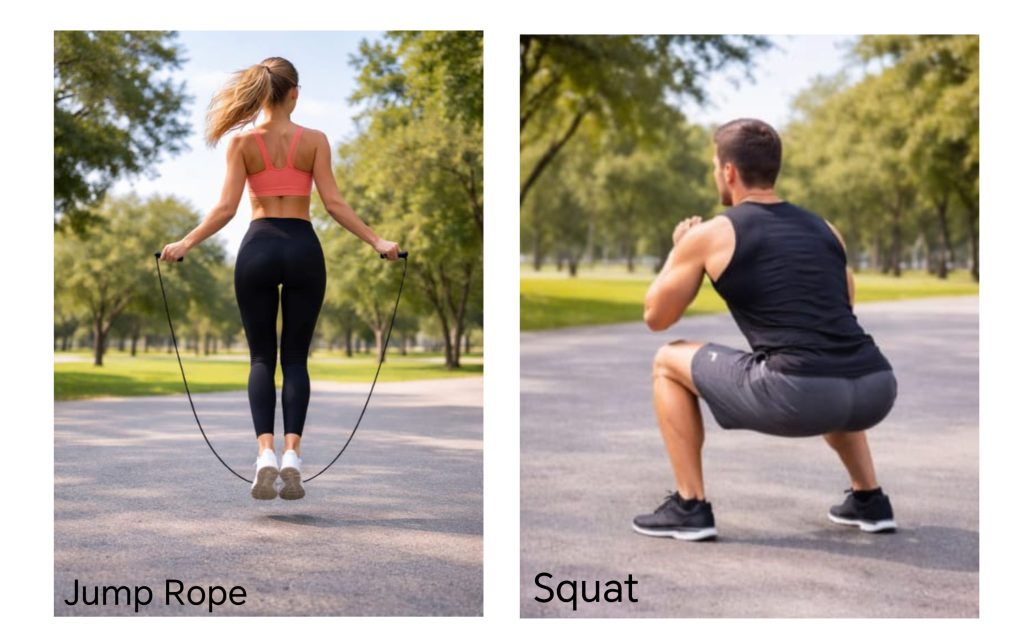
    2. Jump Rope

    Jump rope delivers strong heart benefits, better coordination and efficient calorie burn in just a few minutes per day.

    The Benefits of Jump Rope are: –

    • It Improves Cardiovascular Fitness. Rapidly elevates heart rate into an optimal training zone, strengthens heart and improves blood circulation. Importantly, it helps to reduce risk of cardiovascular disease.
    • Boosts Coordination & Agility. Jump rope requires timing between hands, feet and eyes, it enhances balance and neuromuscular control.
    • High Calorie Burn & Efficiency. Everytime when we are performing jump rope, it can burn significant calories in a short time, support fat loss and metabolic health which is ideal for quick and effective workouts.

    Performing Target: 3 to 5 minutes with interval style.

    Jump rope & Squat for Heart Health and Overall Fitness

    3. Squat

    Squats are not just strength, it is also supporting heart health through increased blow flow, building functional lower body power and improves metabolic efficiency.

    The Benefits of Performing Squat are: –

    • Enhances Blood Circulation & Cardiovascular Demand. Squats engage large muscle groups which required significant blood flow. This increases heart rate and improves overall blood circulation. And it also supports cardiovascular conditioning especially when doing in higher reps.
    • Building Lower Body Functional Fitness & Strength. By performing squats, will strengthens muscles used in daily activities such as standing, walking and lifting. It also improves our balance and stability.
    • Boosts Metabolic Health. Squats will improve insulin sensitivity and support fat metabolism. It also contributes to weight management and overall fitness.

    Performing Target: 2 to 3 sets of 12 to 15 reps each.

    4. Push-Up

    Push-up develops strength, core stability and endurance, making them a highly efficient full body exercise with added heart health benefits when performing consistently.

    The Benefits of doing Push -Up are:-

    • Push-up Builds Upper Body Strength. It targets chest, shoulders and triceps. It also engages supporting muscles for stability. In addition, it is improving overall pushing strength and daily functional movements.
    • It Enhances Core Stability. Push-up requires maintaining a rigid body position and activates abdominal and lower back muscles.
    • Supports Cardiovascular & Muscular Endurance. If we done in moderate to high reps will elevates heart rate. Besides, it also improves muscular endurance overtime.

    Performing Target: 2 to 3 sets of 10 to 20 reps each.

    Push up & Plank for Heart Health and Overall Fitness

    5. Plank

    Planks strengthen the core, breathing control, and endurances which indirectly supports Heart Health and Overall Fitness by improving efficiency and stability during physical activities.

    The Benefits of Performing Planks are:-

    • Supports Breathing & Heart Efficiency. Plank encourages controlled, steady breathing under tension and also enhances coordination between core muscles and respiration – It helps the body use oxygen more efficiently during daily activities.
    • Builds Muscular Endurance. It trains muscles to sustain effort overtime, improves overall stability during other exercises and contributing to better performance and reduce fatigue.
    • Improves Core Stability & Posture. Plank helps strengthen deep curve muscles such as abdominal & lower back and helps maintain proper spinal alignment. Furthermore, reducing strain on the body and improving movement efficiency.

    Performing Target: 2 sets of 30 to 60 seconds.

    6. Lunges

    Lunges develop balance, blood circulation, and functional strength, making them highly effective for both Heart Health and Overall Fitness.

    The Benefits of Performing Lunges are: –

    • Improve Balance & Stability. Performing lunges can train each leg independently. It engages stabilizer muscles and also enhances coordination which reducing risk of falls or injury.
    • Enhances Blood Circulation & Heart Health and Overall Fitness. By doing Lunges can activates large lower-body muscles and increase blood flow as well as cardiovascular demand. It also supports better blood circulation and heart function.
    • Building Functional Strength. Lunges can strengthen quads, glutes and hamstrings that improves overall mobility and daily performance.

    Performance Target: 2 to 3 of 10 to 15 reps per leg.

    Stretches & Lunges for Heart Health and Overall Fitness

    7. Stretches

    Stretching supports mobility, recovery, and injury prevention. Making it essential for maintaining Heart Health and Overall Fitness and also long-term physical health.

    The Benefits of Stretching are: –

    • Reduces Muscle Stiffness & Injury Risk. Stretching relieves tension in key muscle groups and improves muscle elasticity so as lowers the likelihood of strains and injuries.
    • Enhances Blood Flow & Recovery. Stretching promotes blood circulation to muscles and helps deliver nutrients and remove waste. At the same time speeds up recovery and reduces sorness.
    • Improves Flexibility & Range of Motion. It also lengthens muscles and reduces tightness. Besides, it enhances joint mobility to allow smoother, more efficient movement.

    Performance Target: 5 to 10 minutes (focusing on hamstrings, chest, hips, and shoulder).

    Incorporating daily exercises significantly enhances Heart Health and Overall Fitness. Committing to one or two of the recommended exercises fosters a sustainable routine, promoting not only cardiovascular well-being but also resilience against chronic illnesses. Prioritizing prevention through consistent physical activity is crucial for long-term health benefits.

    In conclusion, Prevention is always more Effective Than Cure!

    To read more about Healthy Life Topic please do not hesitate to click here. Thank you

  • Stop Dieting: 5 Smart Way to Eat Healthy Everyday

    Stop Dieting: 5 Smart Way to Eat Healthy Everyday

    A lot of people who heard about diet will link it to Eat Less and not Eating Healthy. This is the most wrong concept, that’s why not many people succeed in well managing weight control. Instead, it’s important to focus on how to Eat Healthy.

    I used to think eating healthy meant strict dieting and cutting out all my favorite foods. Unfortunately, it never lasted every time I tried. I felt tired and even got headaches when I changed my habits too quickly.

    **caffeine withdrawal cause headache

    Learning to Eat Healthy allowed me to enjoy my meals without guilt. I also realized that eating healthy everyday is about building something simple that can fit into our daily life. There is no shortcut way.

    1. Important of Balance, Not Restriction

    In order to control our body weight well and eat healthily, we should eat a balanced diet rather than cutting out foods. Restrictive dieting can cause our body to lack vitamins and affect our health in the long run.

    Every meal should contain carbohydrate, protein and fiber. My simple formula is 50% fiber, 25% protein and 25% carbohydrate on each plate meal.

    Carbohydrates provide the primary source of energy throughout the day. They not only steady your energy but also fuel your brain, support physical activity, and help you stay active. Without enough carbohydrate, you will feel tired and weak.

    Protein aids build and repair body muscle. Besides that, it’s also helps stabilize blood sugar. However, consuming too much protein can place a metabolic burden on the body, particularly on the kidneys.

    Fiber is essential for a healthy digestive system. It helps you feel full and satisfied and also improves gut health. Foods rich in fiber include vegetables, fruits, and whole grains.

    Eating healthy is not about cutting food or eating less – it’s about BALANCE. A balanced plate can be simple: brown rice for carbohydrate, grilled chicken for protein, and vegetables for fiber. This combination provides the nutrients your body needs without overcomplicating your diet.

    (For more details)

    2. Sugar Control

    Eating Healthy not equal to cutting sugar quickly and making food taste bland. I started by reducing the sugar in my daily morning coffee to 1.5 teaspoons, then to 1 teaspoon instead of 2 teaspoons at the beginning.

    Many foods contain hidden sugar, such as drinks, sauces and packaged snacks, which can make it difficult to eat healthily. Whenever you have a craving, try making these foods at home. This allows you to choose ingredients that already have natural sweetness such as berries for smoothies, sweet vegetables like carrots or pumpkin for sauces and bananas for snacks. By preparing food yourself, you can enjoy tasty meals while maintaining a healthy diet.

    Besides that, SWAPPING INGREDIENTS and USING HEALTHY ALTERNATIVES is one of the solutions for eating healthily. For example, use honey as natural organic ingredient in small amount, add fresh fruit instead of sugar in yogurt, use cinnamon to enhance sweetness naturally in coffee and choose unsweetened milk instead of flavored milk.

    Controlling sugar doesn’t not meant cutting it out completely (ZERO); it’s about making smarter choices and letting your taste buds adjust naturally.

    Comparison of eat healthy natural foods like yogurt and fruit versus sugary processed foods like cakes and chips

    3. Eat Whole Foods, Not Processed Foods

    To eat healthy every day without dieting, one of the smartest steps is to focus on whole foods instead of processed foods. Rather than restricting what you eat, simply choosing more natural and less processed options can make a big difference to your overall health.

    A diet must also be healthy, not just restrictive. Choosing the right quality of food is more important than simply eating less.

    Whole foods are foods that are either unprocessed or minimally processed. They are as close to their natural state as possible, without added sugar, excess salt, unhealthy fats, or artificial ingredients. examples include fresh fruits, vegetables, nuts, seeds, eggs, and whole grains.

    Why Focus on Whole Foods?

    A diet rich in whole foods provides many proven health benefits:

    • Nutrient Density
      Whole foods contain a natural combination of vitamins, minerals, fiber, and antioxidants that work together to support your body. This is far more beneficial than processed foods with added nutrients.
    • High in Fiber
      Fiber helps improve digestion, control blood sugar levels, and keep you feeling full longer. Most processed foods lose their fiber during manufacturing.
    • No Empty Calories
      Whole foods provide real nutrition along with energy, while many processed foods contain “empty calories” with little nutritional value.
    • Fewer Harmful Additives
      By choosing whole foods, you naturally reduce your intake of added sugar, sodium, and unhealthy fats- key contributors to chronic diseases such as heart disease, type 2 diabetes, and obesity.

      Medical News Today

      When you focus on whole foods, you don’t need strict diets – your body naturally gets what it needs to stay healthy.

      4. Listen to Our Body

      To truly eat healthy, it’s important to listen to your body’s signals instead of following strict diets. Pay attention to hunger and fullness cues instead of eating out of habit or boredom. Start by eating slowly, savoring each bite, and stopping when you feel satisfied-not stuffed.

      Include a variety of foods that provide energy and nutrients, such as vegetables, fruits, whole grains, and protein. Drink water regularly to stay hydrated and notice how your body reacts to different foods. By turning into your body’s signals, you can make mindful choices and enjoy eating healthy naturally.

      5. Make It a Daily Habit (Not a Shot-Term Diet)

      The last smart way to eat healthy every day is to turn it into a DAILY HABIT. It is not a short-term diet, but a long-term lifestyle you can sustain. Instead of aiming for perfection, focus on starting small and staying consistent. Simple steps done every day will always be more effective than extreme changes that don’t last.

      For example, you can turn cooking into a hobby and enjoy preparing your own meals. Pay more attention to the ingredients you use each day, choosing natural and wholesome options whenever possible.

      Over time, these small actions will become part of your routine. Healthy eating will no longer feel like EFFORT– it becomes your LIFESTYLE.

      prepare and cook whole foods for eat healthy daily

      IN A NUTSHELL

      Healthy eating doesn’t start with dieting – it starts with a shift in mindset. When you stop chasing quick results and focus on balance, sugar control, listening to your body, whole foods and daily habits, everything becomes simple and more sustainable.

      You don’t need to be perfect. You just needs to be consistent. Small , smart choices made everyday are far more powerful than strict diets that only last a short time.

      When you enjoy your food while making healthier choices, staying consistent and maintaining your lifestyle becomes effortless.

      In the end, healthy eating is not about restriction- it’s about creating a lifestyle that nurtures your health, boots your energy, and supports your long-term well-being.

    • Stay Healthy Every Day – 5 Simple Ways to Boost Your Health

      Stay Healthy Every Day – 5 Simple Ways to Boost Your Health

      Here we go to find out the 5 simple and easy ways to Stay Healthy Every day ……

      Many people are looking for easy ways to stay fit and healthy now a days. Is that very hard to look for ways to stay healthy? Exactly not but we need to have consistency and endurance to execute them.

      Staying healthy every day starts with small, consistent habits. By eating nutritious meals, staying hydrated, and incorporating simple exercises, we can stay healthy every day and boost our energy and well-being. Adding colorful fruits and vegetables, or enjoying a healthy homemade smoothie, makes it easier to maintain a balanced lifestyle every day.

      Ways to Stay Healthy Every Day: –

      Rest Early to Stay Healthy Every Day

      Rest Management:
      As we know we have 24 hours per day, 8 hours for works, 8 hours for fun and the last 8 hours is for resting our body – SLEEPING. Why sleeping is so important to everyone? We not only need a full 8 hours deep sleep but also need to go to bed before 11pm. Because while we start fall in sleep, then our body starts working to detox and there’re a different time schedule to detox for major internal organs. The time schedule to detox major internal organs are:

      • Gall Bladder 11pm to 1am
      • Livers 1am to 3am
      • Lungs 3am to 5am
      • Intestines 5am to 7am

      From the above, we can know that how important is a sufficient sleeping hour and quality sleep may tremendously affect our daily health. For those who has this good habit I believe their face will look glowing, tender skin and energetic appearance.

      Notwithstanding the above, an 8 hours quality sleep may help to reduce our stress and tension in order to bring us healthy mental being as well.

      If we wish to Stay Healthy Every Day, we must have the will power to stay away from CHEAT MEALS, JUNK FOODS & PROCESSED FOODS!

      Try to prepare our breakfast, lunch and dinner by ourselves. Make these actions become a good habit to gain healthier life. So, what to have for our breakfast? Lunch? and Dinner?

      Clean Diet to Stay Healthy Every Day

      Below are some small tips for the above questions:

      Breakfast :
      Pan grilled chicken breast with two full boiled eggs (protein), two pieces of toasted bread (carbs) and broccoli or leafy lettuce (mineral and vitamins).

      Lunch:
      Fried fish, steam Tofu with Shrimps (proteins), a small portion of rice (carbs) and a bowl of mix salad (vitamin and mineral).

      Dinner :
      Grilled chicken or steak (proteins), mashed potatoes (carbs) and boiled kale topping with olive oil (vitamins and mineral) make our dinner perfectly served.

      A humble reminder that in order to stay healthy every day, it technically tight up with Clean & Balanced Diet always!

      Stay Healthy Every Day

      Physical Fitness Management:

      Regular exercise improves our health, according to World Health Organization

      If we don’t perform exercises regularly, we might encounter

      • Cardiovascular Deterioration;
      • Metabolic Dysfunction;
      • Musculoskeletal Weakness;
      • Reduced Immune Function Energy;
      • Productivity Decline;
      • Increase Risk of Certain Cancers;
      • Mental Health Impact.

      Hence, we must strive to make physical fitness activities as our daily good habits to gain a Healthy life. Actually, we need not have to spend long hour to perform exercise, 20 to 45 minutes per section will consider more than sufficient.

      Here are some suggestions what exercises to be performed daily or three times in a week:

      FOR CARDIOVASCULAR AND LUNG FUNCTIONS EXERCISES

      • Jogging – We can run 20 to 45 minutes disregard pace and speed for twice a week.
      • Brisk Walk – We can maintain a chill brisk walking for 20 to 45 minutes twice a week.
      • Swimming – We can swim for 20 to 45 minutes any style we like twice a week.

      Of course, we also can perform three of them each once in a week too.

      Benefits:

      With consistency to perform these exercises, we may improve cardio and lungs functions, stamina and gain legs muscles.

      FOR MUSCULAR AND SHAPE BUILDING EXERCISES

      • Push up – 20 to 50 times daily (depending on our own strength);
      • Sit up – 20 to 50 times daily (depending on our own strength);
      • AB Roller – 10 time per set X 5 (depending on our own strength);
      • ABS stretching – 3 times a week.

      Benefits:

      Better posture, better endurance and stamina, enhanced body control and stronger upper part body muscles.

      Stay Healthy Everyday with Healthy Drinks

      Hydrated Management :
      Notoriously, our body built up by 70% of water, so always keep our body HYDRATED is very important to health.

      When we are dehydrated, we will suffer from:

      • Reduced Physical Performance;
      • Impaired Brain Function;
      • Increased of Heat Exhaustion & Heatstroke;
      • Kidney Stress;
      • Cardiovascular Strain;
      • Digestive Issues.

      So, we must at least consume 2 liters of water daily in order to keep us hydrated and stay healthy every day.

      Besides, we also can DO IT YOUR OWN homemade smoothies to absorb more vitamins and nutrients to keep us more energetic and stay healthier every day.

      In addition, Healthy Smoothies can be great way to boost our fruit and vegetable intake and support overall nutrition when made with whole foods

      Mental Management :
      Stressed, Working/Studying Pressured, Depressed and Sadness can be healed by MEDITATION.

      As we know Mental Health is bound to our Physical Health. So, we must well manage our mental fitness in order to gain Healthy in Physical Fitness as well.

      Through Meditation, we will benefit from:

      • Reduce Stress;
      • Improves Focus;
      • Better Emotional Control;
      • Enhances Self-awareness;
      • Support Better Sleeps.
      Tips to Stay Healthy Every Day

      Therefore, Mental Health is one of the key components to stay Healthy everyday too.

      Incorporating meditation into your daily routine can significantly enhance your mental well-being, which is intrinsically linked to physical health.

      By effectively managing stress and negative emotions, individuals can create a harmonious balance that fosters overall wellness.

      Thus, prioritizing mental fitness is essential to stay healthy every day. Ultimately, a holistic approach that combines nutrition and mental management will lead to a more vibrant and energetic lifestyle.

      In conclusion, Sleep, Nutrition, Exercises, Hydration and Mental Health form human body ECOSYSTEM because they are all interconnected and influence one another !

    • How Drinking Coffee Healthily Became My Daily Ritual

      How Drinking Coffee Healthily Became My Daily Ritual

      Drinking coffee healthily is important as I started when I began my college studies. Obviously, I can’t live without COFFEE nowadays and became an important part of my daily routine. To me, coffee is not just a beverage – it is a daily ritual and a peaceful pause before the rush of the day. But enjoying it every day without harming my body is something I’ve learned to approach carefully.

      As far as I know, drinking one cup of coffee a day does not cause healthy issues; on the contrary, it may aid reduce the risk of certain chronic diseases.
      Drinking Coffee Healthily Everyday

      Drinking Coffee Healthily Everyday

      Main benefits of drinking coffee healthily every day (keep it moderate: 1-3 cups):

      * Boosts energy & focus – caffeine stimulates the brain
      –> better alertness, concentration, and productivity

      * Supports metabolism & fat burning – slightly increase metabolic
      rate –> may help with weight control

      * Good for brain health
      – Linked to lower risk of diseases like Alzheimer’s disease and
      Parkinson’s disease.

      * May protect the liver
      – Associated with the lower risk of liver diseases (fatty liver,
      cirrhosis).

      * Support mood
      – Can reduce risk of depression and improve overall mood.

      These benefits are the reason why drinking coffee every morning has become part of my daily ritual. However, to enjoy these benefits safely and drinking coffee healthily, I always make sure to avoid too much sugar and cream, not drink coffee too late in the day to protect my sleep, and keep my intake moderate to prevent issues like anxiety or a racing heart.

      Drinking Coffee Healthily Became My Daily Ritual

      According to www.efsm.online scientific reviews, European food Safety Authority concluded :

      Daily caffeine intakes up to 400mg do not raise safety concerns for healthy adults.

      drinking-coffee-healthily

      You don't need to drink that much as 400 mg is a safety upper limit - NOT a recommended target!

      To be honest, not everyone enjoys black coffee. While adding sugar, creamer, milk or syrup can make it taste better, it may also lead to unwanted blood sugar spikes. So, how can we enjoy coffee in a healthier way without experiencing caffeine withdrawal? I used to get headaches whenever I stopped drinking coffee, which made me realize the importance of consuming it more mindfully. That’s why I’d like to share one of my simple secret – a homemade coffee smoothie that allows me to enjoy my daily coffee in a healthier and more balanced way. Always choosing natural, organic, and unsweetened ingredients is the key to keeping your coffee smoothie low in sugar.

      Ultra Low-Sugar Coffee Smoothie recipe:

      • 1 cup chilled black coffee
      • 1/2 cup unsweetened almond milk
      • 1 tbsp chia seeds
      • 1 tbsp peanut butter
      • 4-5 ice cubes
      • 1/4 tsp cinnamon

      Blend everything until smooth and adjust the thickness with more milk or ice. One important step is to avoid overblending, as this can increase the speed of sugar absorption. Normally fiber and intact food slow down sugar absorption, if you over-blend, the ingredients break down into very fine particles. Even in a low-sugar smoothie, over-blending can make your body absorb the natural sugars ( from milk or peanut butter) faster than intended.

      Why this is better

      • Almost ZERO sugar ( no banana)
      • No Blood sugar spike
      • Healthy fats + Fiber –> more stable energy
      • Still creamy and filling

      Homemade Styles
      Time for action
      Never Miss It !

      The Daily Drink Habit Nobody Told You About…

      Button

      Drinking coffee at the right time can significantly enhance its benefits while minimizing any adverse effects. The optimal period to consume coffee is typically in the late morning or early afternoon, as this aligns with the body’s natural cortisol levels, promoting alertness without the risk of disrupting sleep patterns.

      Additionally, incorporating a low-sugar coffee smoothie into your routine not only provides a nutritious alternative but also aids in maintaining stable energy levels throughout the day. This careful approach to coffee consumption fosters a healthier relationship with caffeine, ultimately supporting overall well-being.


      In conclusion, drinking coffee healthily has become more than just a daily habit.

      It is a meaningful part of my routine that brings both comfort and energy to start the day. While moderate consumption, such as one cup a day, can offer health benefits like improved focus, mood, and reduced risk of certain diseases.

      But it is still important to consume it mindfully. Additives like sugar and syrups may reduce its health value, and dependence on caffeine can lead to withdrawal symptoms. Choosing healthier alternatives, such as a homemade coffee smoothie with natural and unsweetened ingredients, allows me to enjoy coffee while maintaining better control over sugar intake.

      Ultimately, balance and awareness are key to enjoying coffee in a way that supports both well-being and lifestyle.